Board members on the digital society
Researchers are heavily involved in the Digital Society project, but the members of the executive boards of the Dutch universities are as well. Emile Aarts (Rector Tilburg University), Jan Mengelers (chairman Eindhoven University of Technology) and Karel Luyben (Rector Delft University of Technology) tell about their dreams of a digital society and their involvement in this project.
The fourth revolution
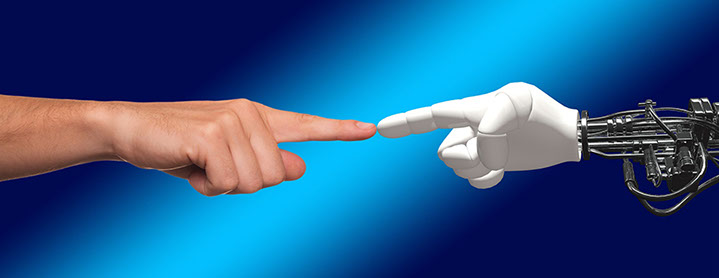
'We're on the threshold of the fourth revolution. The first revolution taught us that the earth isn't at the centre of our universe. The second revolution showed to us that we share common ancestors with the apes. The third revolution made us realise that our brain can take independent decisions. And now, the fourth revolution will enable us to build machines, robots and computers stronger, smarter and better than we ourselves.'
The dream
'Many fear the rise of intelligent machines, but I'm looking forward to the opportunity to create a world in which man and machine will join forces. I have a dream that one day computers will be empathic and socially intelligent in a way which incorporates humans and makes for a better world. The challenge lies in equipping computers with moral precepts.’
The virtual learning environment
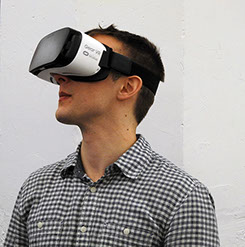 'At Tilburg University we are preparing ourselves for the fourth revolution, in education as well as in research. To us this means prioritising the use of data science, for instance through our DAF Technology Lab, where students can go on a 3D journey across the human brain and discover the way it works. They can also use virtual reality as a form of time travel to walk through a city and see what it looked like a decade or a century ago. Law students even have a virtual courtroom where they can experience the thrills of an actual lawsuit.’
Main driver
'ICT and data sciences are booming business in the 21st century, making digitisation one of the principal drivers of the economy and the sciences as well as a driving force for change in the coming decades. You can see the major influence of digitisation all around, whether it involves computers that aid doctors in interpreting MRI scans, bulky people who receive personal lifestyle advice in order to prevent or possibly cure disease, smart energy networks in smart living environments, or even language and culture. The effects of digitisation are so wide-ranging, they could fill hours of fascinating television.'
Hope
'I was born in 1953 so I grew up in the second half of the previous century, when technology was heralded as a great new force for the good of society. From a cold and devastated Europe we've developed into a warm, comfortable and relatively safe society. At the same time, nuclear weapons and environmental disasters have shown us the downside of technological progress, while space travel has made us realise the vulnerability of planet Earth. My hope and my conviction is that technology will continue to serve humanity and contribute to solving the great challenges in the next decades. I use the word "technology", even though I feel that the driving force behind the technology of today and tomorrow is digitisation. In establishing a digital society, we need to mind its ethical and social consequences more than ever.'
Rules and regulations
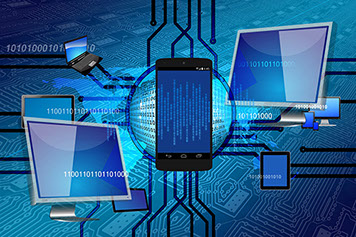 'Digital society is complex, multidisciplinary and all-encompassing, creating a need for science to assign priorities and make order out of chaos. If it hadn't been for the pioneering role of science, Google and Facebook would never have amounted to anything, as market parties don't plan ahead for more than a handful of years. Few people take the responsibility to address the problem of what the Netherlands should look like in twenty to fifty years. The results of scientific research usually manifest themselves in society only in the long run, and the government has a democratically determined task to create preconditions for the long-term development of society. As we researcher are now joining forces, I hope that government will also play its part – through funding, yes, but also by defining the priorities for the Netherlands, and by acting as a "launching customer", a driving force. For example, the government could adjust or relax rules and regulations governing certain experimental domains temporarily, in a prudent and measured way of course, and subject to conditions. The experiments with driverless cars show the many possibilities. I think the government could do this more often.'
National Science Agenda
'Digitisation is the bottom line of the National Science Agenda and its 25 routes, holding together the fabric of the system as a binding element. It informs more areas than you might initially realise, as nearly all research domains experience increasing dataflows from which conclusions need to be drawn. The National Science Agenda is permeated with digitisation, an area in which the Netherlands is excellently equipped to become a leader. This is a compact, highly developed and well-organised country with an excellent physical and digital infrastructure and an advanced level of knowledge; a testing grounds for urbanised delta regions. With the Agenda, the universities, the mindset and a history of cooperation, Dutch researcher and government can really make a difference nationally and internationally if we join forces in the field of the digital society.'
Access to knowledge
'I hold a seat in the EU Open Science Policy Platform. We discuss the best way to gather and combine the heap of data, which doubles in size every year, and make it available to society. In this process the codeword is FAIR, which stands for Findable, Accessible, Interoperable and Reusable. It's my conviction that researchers, companies and government authorities should have safe and easy access to knowledge being developed by all of us.'
Brain implant
'In today's society more and more things are digitally connected, an issue which isn't only technical but also legal, ethical and health care-related. For example, if a brain implant existed which partially or completely stops dementia, would you want one inside your own brain? We would be able to read out, program and control such implants remotely. That may sound a bit dodgy, but the same applied to the first pacemakers.'
The cornerstone
'Universities are the cornerstones of a digital society, with research that brings about the latest technologies and developments. We also educate an ever-increasing segment of society, as the proportion of the population attending university has risen from ten to fifty per cent in modern times and may continue to increase to seventy or eighty per cent according to recent studies. This raises the need to tell the truth to all the graduates, postgraduates and PhDs who will not be able to pursue a career in science. They will instead end up in businesses, civil-society organisations and government; in other words, in society.'
The dream
'We should take care not to include so many things in the notion of “digital society” as to make it meaningless. I consider data, algorithms and systems to be the connecting factors, with a great many loose parts, building blocks and ingredients to be found in each university and each faculty. I have a dream that the connecting factors will enable us together to erect a whole building, which also happens to be human-centred. Together with all universities, we must build a people-oriented digital society, but it will remain a collection of loose parts unless we connect the whole. Together, we can make the Netherlands stronger.'